http://www.youtube.com/watch?v=SEZK7mJoPLY
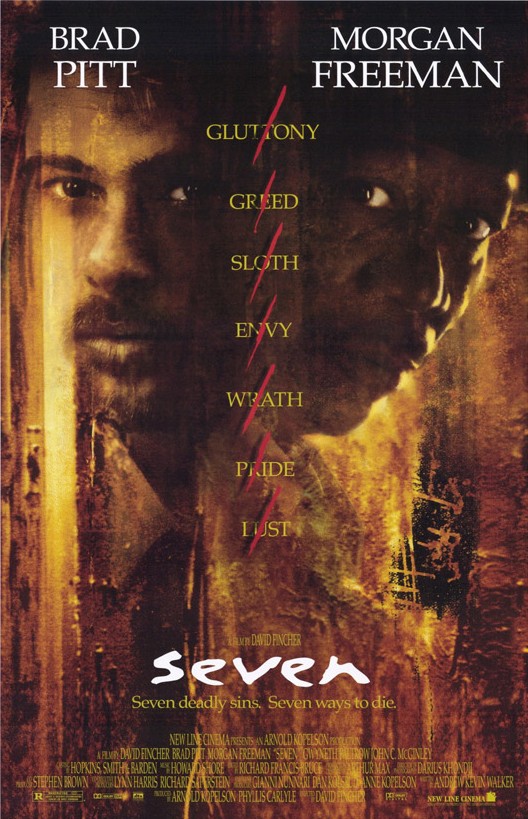
This is the opening sequence I looked at Se7en.
Analysing it I realised that the opening sequence does not really release a lot about the film,
it only releases enough information which keeps us engaged into the film.
Se7en was released in 1995 I chose to look at this film because it is it is in the category that we were going to base our opening sequence in and it is a thriller.
Looking at the opening few minutes of this film I realised it did not reveal the identity of the character once and furthermore it only showed glimpses of what was about to come as we proceed through the film.
The opening minutes revealed glimpses and was mixed with the credits of the film.
The opening of the film shows glimpses of where there is a razor blade and where the actor it cutting the skin of his fingers. Also it is showing someone crossing out and highlighting things on a paper which creates a sense that someone is being targeted. There are many different close up shot of the persons hands and paper markings from different angles, also there are a few rapid shots creating a sense of adrenaline.
Also there is a very dramatic beat in the music and it seems to be getting faster this creating a tingling sensation that something is about to blow there top of and a dramatic action is going to take place.
What I learnt was that quick close movements cause the adrenaline around the body flowing and also creates suspense. Also having close up's of people's actions shows us the mental state of a being.
Tuesday, 30 November 2010
Research Of Title Sequence
For this part of our research, i am going to analyse the title sequence used in the opening of 'Catch Me If You Can'
I found this title sequence very interesting as it pretty much sums up everything which happens in the film. Going through the stages and what jobs the main protagonist makes his self to be.
The title uses a unique way of showing the names of everyone who worked on the film as well as the actors. It uses the text IN the actual opening. For example. At 1:17 of the opening, it shows an animated elevator going up and down, the text is used effectively as it keeps you interested but it doesn't distract you from what is going on. This also happens at 1:29 when the women are using type writers.
Another reason why this use of opening Is effective is because it keeps the audience remembering what this film is about. By the end the audience understands what the main stick figure goes through.
One thing I have taken away from this is that a good opening title sequence = a great film to remember. 'Catch me if you can' is remembered (At least for me) by the opening sequence, and keeps the audience hooked on watching it after a short while of not watching it. Even after 9 years, it is still one of the best opening title sequences in film.
I found this title sequence very interesting as it pretty much sums up everything which happens in the film. Going through the stages and what jobs the main protagonist makes his self to be.
The title uses a unique way of showing the names of everyone who worked on the film as well as the actors. It uses the text IN the actual opening. For example. At 1:17 of the opening, it shows an animated elevator going up and down, the text is used effectively as it keeps you interested but it doesn't distract you from what is going on. This also happens at 1:29 when the women are using type writers.
Another reason why this use of opening Is effective is because it keeps the audience remembering what this film is about. By the end the audience understands what the main stick figure goes through.
One thing I have taken away from this is that a good opening title sequence = a great film to remember. 'Catch me if you can' is remembered (At least for me) by the opening sequence, and keeps the audience hooked on watching it after a short while of not watching it. Even after 9 years, it is still one of the best opening title sequences in film.
Researching The Thriller Genre
Here I am going to analyse our film genre (Kidnap thriller)
Mainly a thriller has two characters. An evil mastermind, stalker, psycho etc. And a hero played usually by a person of the law, or just an underdog doing what no man could. A prime example of this is 'The Dark Night' were batman plays the brave hero and the Joker is the evil psycho serial killer.
The sense of realism is crutial in this genre as it is supposed to be as realistic as possible (The public is frightened by things that seem un-natural but can easily occur in reality). A good way to keep this sense of realism is by the use of low key lighting. The low key lighting keeps the viewer on the edge of there seat as they don't know what may be lurking around the corner.
Another main thing thrillers have is the sense of being watched. I have touched upon this in my analysis for vertigo, a sense of being watched corresponds with the realism as stalkers and psycho's tend to do this.
The settings for thrillers are usually dark, abandoned building, alley ways, barroned land. The reason being is that tensions is created in small isolated places causing fright and an enigmatic settings for the viewer as anything unexpected can happen at any given moment.
The main story line for the main protagonist is usually a quest for them to do something. This is about the time when the antagonist comes into play to stop them from fulfilling there goal, thus creating more excitement and interest for the audience.
Using this knowledge, i can take this away and make sure I create as much tension and enigma in my final film as possible. The build up of tension is crucial as it keeps the viewer interested.
Mainly a thriller has two characters. An evil mastermind, stalker, psycho etc. And a hero played usually by a person of the law, or just an underdog doing what no man could. A prime example of this is 'The Dark Night' were batman plays the brave hero and the Joker is the evil psycho serial killer.
The sense of realism is crutial in this genre as it is supposed to be as realistic as possible (The public is frightened by things that seem un-natural but can easily occur in reality). A good way to keep this sense of realism is by the use of low key lighting. The low key lighting keeps the viewer on the edge of there seat as they don't know what may be lurking around the corner.
Another main thing thrillers have is the sense of being watched. I have touched upon this in my analysis for vertigo, a sense of being watched corresponds with the realism as stalkers and psycho's tend to do this.
The settings for thrillers are usually dark, abandoned building, alley ways, barroned land. The reason being is that tensions is created in small isolated places causing fright and an enigmatic settings for the viewer as anything unexpected can happen at any given moment.
The main story line for the main protagonist is usually a quest for them to do something. This is about the time when the antagonist comes into play to stop them from fulfilling there goal, thus creating more excitement and interest for the audience.
Using this knowledge, i can take this away and make sure I create as much tension and enigma in my final film as possible. The build up of tension is crucial as it keeps the viewer interested.
To release our video we want to find a british film institution, this institution has to have good links and a good reputation for great hits.
We decided to choose a british institution, not a hollywood institution because we can create a good film with a lower budget and we are also based in the UK.

I first looked at shallow grave produced in 1994 and directed by Danny Boyle. It follows the genre we want to do which is thriller. It was produced by Channel 4 and produced by PolyGram Filmed Entertainment. We considered this as a institution we could have used.
Dead Man's Shoes was another British released film we looked at, its production took place in 2004 and directed by Shane Meadows, it follows the same genre we want to follow thriller. It was produced by British company called Warp films, and also distributed by a British Optimum Releasing. This is a company we could use.
The final movie I looked at was sexy beast the basic background of this movie is that a retired gangster hire's a safe cracker for one final job. It was produced in 2000 and directed by Jonathan Glazer (Debut Film). It was produced by Jeremy Thomas and distributed by Fox searchlight pictures. I don't think we will use this as it is an american distributor.
We decided to choose a british institution, not a hollywood institution because we can create a good film with a lower budget and we are also based in the UK.
I first looked at shallow grave produced in 1994 and directed by Danny Boyle. It follows the genre we want to do which is thriller. It was produced by Channel 4 and produced by PolyGram Filmed Entertainment. We considered this as a institution we could have used.
Dead Man's Shoes was another British released film we looked at, its production took place in 2004 and directed by Shane Meadows, it follows the same genre we want to follow thriller. It was produced by British company called Warp films, and also distributed by a British Optimum Releasing. This is a company we could use.
The final movie I looked at was sexy beast the basic background of this movie is that a retired gangster hire's a safe cracker for one final job. It was produced in 2000 and directed by Jonathan Glazer (Debut Film). It was produced by Jeremy Thomas and distributed by Fox searchlight pictures. I don't think we will use this as it is an american distributor.
Monday, 29 November 2010
Analysis Of Title sequence
For this part of the research I looked at the title sequence of Kiss Kiss Bang Bang.
I found the title sequence brilliant at how it shows in animation how one male is running from one side of the screen to the other and then the shot moving with him to the next frame.
Also how it uses gun shots to bring up the actors name and the film name.
The opening title sequence also shows partly what the film is about and how it moves from one thing to another.
It shows moving animations and the titles come in the corners or underneath the main pictures.
The film also constantly reminds the audience that the film will have guns, deaths and chases in it by using bullet holes to show the titles, death by the splattering of blood and chases by the intensity of the music.
Looking at the title sequence I have learnt that having a clear simple title sequence will result in high interest and will also make it a very good film to watch. Although it was made 5 years ago it seems to have one of the most dramatic and eye catching opening sequences ever and it seems to be better than most new films in this day and age.
I found the title sequence brilliant at how it shows in animation how one male is running from one side of the screen to the other and then the shot moving with him to the next frame.
Also how it uses gun shots to bring up the actors name and the film name.
The opening title sequence also shows partly what the film is about and how it moves from one thing to another.
It shows moving animations and the titles come in the corners or underneath the main pictures.
The film also constantly reminds the audience that the film will have guns, deaths and chases in it by using bullet holes to show the titles, death by the splattering of blood and chases by the intensity of the music.
Looking at the title sequence I have learnt that having a clear simple title sequence will result in high interest and will also make it a very good film to watch. Although it was made 5 years ago it seems to have one of the most dramatic and eye catching opening sequences ever and it seems to be better than most new films in this day and age.
Sunday, 28 November 2010
Thriller Genre
In this part of my research I will look at the different types of thrillers are out there.
Thrillers come in many different ways some examples are Erotic Thrillers, Disaster Thrillers, Conspiracy thrillers, crime thrillers, these are only a few types of thrillers.
Thrillers are normally based on a story line where there is no chance of survival but a hero is there to save the day however there is always a enemy who will try there up most best to wreck the hero's plan and achieve the things there way a prime example of this is snakes on the plane where the FBI is trying to protect a witness but is pushed to his boundaries by the enemy trying to kill the witness to testify.
Thrillers are normally also based in place where there is no where to run or hide and no where to exit. Like snakes on the plane where there is no way to escape. Also in many thrillers as well as there is a difficulty of achieving heroism there is always some major problem for example electricity goes.
The main reason for thrillers is that someone or something is set a test and they have to achieve glory and there will be the enemy there to stop trying to make it succeed however there is only ever one winner the hero who even if he/she is injured will reach his/her goal no matter the consequences.
I could now look at the types I have seen and choose one to use in my film.
Thrillers come in many different ways some examples are Erotic Thrillers, Disaster Thrillers, Conspiracy thrillers, crime thrillers, these are only a few types of thrillers.
Thrillers are normally based on a story line where there is no chance of survival but a hero is there to save the day however there is always a enemy who will try there up most best to wreck the hero's plan and achieve the things there way a prime example of this is snakes on the plane where the FBI is trying to protect a witness but is pushed to his boundaries by the enemy trying to kill the witness to testify.
Thrillers are normally also based in place where there is no where to run or hide and no where to exit. Like snakes on the plane where there is no way to escape. Also in many thrillers as well as there is a difficulty of achieving heroism there is always some major problem for example electricity goes.
The main reason for thrillers is that someone or something is set a test and they have to achieve glory and there will be the enemy there to stop trying to make it succeed however there is only ever one winner the hero who even if he/she is injured will reach his/her goal no matter the consequences.
I could now look at the types I have seen and choose one to use in my film.
Identifying a Target Audience
To identify a target audience for the thriller genre I created a questionnaire which used parts of the acronym GRASS to define them. I asked 15 people to fill the questionnaire in and out of these 15 people two were aged under 12, five were aged between 13-19, three were aged between 20-29, another three were aged between 30-39 and two were aged over 40.
From the questionnaire I have found that the majority of people who like the thriller genre above the rest fell into the 30-39 age group with one person from the teenage group, the 20-29 group and the over 40s. The people which chose thrillers fell into the working class and lower working class category; which is people who are blue collar workers, manual workers, unemployed or students.
The results from the next question show these people would be willing to pay around £5 - £9 to see a film which is what a ticket at the cinema currently costs. This is useful to the group because we know that the majority of people who visit the cinema are in their teens and their twenties.
The gender of these people is almost even in number with 3 male to 2 females, this tells us that gender doesn't really matter as both genders like thriller films. We can see though that more men like horror films than women, and women like more romantic films than men.
The main thing we can take away from this questionnaire is our target age, we must be aiming our film at an audience of around 30 years old, therefore we should use language and actions which appeal to this age group. We don't need to worry about making the film appeal to a specific gender and we don't need to make it appeal to a specific race either as both genders like thriller films and any one from any race can enjoy a thriller film. For the social economic status of the film we could use characters who are from working class backgrounds because the questionnaire shows people who like thriller films are from this type of background.
Here is the questionnaire I gave out,
From the questionnaire I have found that the majority of people who like the thriller genre above the rest fell into the 30-39 age group with one person from the teenage group, the 20-29 group and the over 40s. The people which chose thrillers fell into the working class and lower working class category; which is people who are blue collar workers, manual workers, unemployed or students.
The results from the next question show these people would be willing to pay around £5 - £9 to see a film which is what a ticket at the cinema currently costs. This is useful to the group because we know that the majority of people who visit the cinema are in their teens and their twenties.
The gender of these people is almost even in number with 3 male to 2 females, this tells us that gender doesn't really matter as both genders like thriller films. We can see though that more men like horror films than women, and women like more romantic films than men.
The main thing we can take away from this questionnaire is our target age, we must be aiming our film at an audience of around 30 years old, therefore we should use language and actions which appeal to this age group. We don't need to worry about making the film appeal to a specific gender and we don't need to make it appeal to a specific race either as both genders like thriller films and any one from any race can enjoy a thriller film. For the social economic status of the film we could use characters who are from working class backgrounds because the questionnaire shows people who like thriller films are from this type of background.
Here is the questionnaire I gave out,
Wednesday, 24 November 2010
Preliminary Task
For the preliminary task we had to create a short continuity film that involved a character opening a door, crossing a room, sitting down opposite some one and then engaging in conversation with them. Our task must demonstrate match on action, short/reverse shot and stick to the 180-degree rule.
We completed the film and edited it to a level we were happy with, this helped us find problems, solutions and more ideas to implement in our final film.
The first thing we noticed in our preliminary film was the opening shot being too long, it consisted of a seven second, long shot showing Nathan walk down a hallway to a door. We think that to keep the viewer more entertained and interested we could have varied our shot type or cut the clip down more. From this we have learned that to do better in our final film we must use a wider variety of shots especial when displaying a travelling scene, is done correctly it should also help us achieve some tension in our film which is going to be set in the thriller genre.
Our match on action of Nathan opening the door seemed a bit jumpy, especially once he gets through the door. This has told us we need to work on our editing skills more in order to achieve a fluid, seamless action shot which would look professional. Our time spent editing went by quickly and we now realise that when editing our final film we must spend time fine tuning each clip to get good quality match on action.
A final error we wanted to discuss is the continuity in the conversation, when the camera changes perspective that actors also change position; this spoils the overall continuity of the film and distracts the viewer which is not what we want to happen. We believe that to prevent this from happening in the future we will have to look more closely at the footage we just filmed to keep continuity as close to perfect in the next shot. This will also keep the viewer fully engaged in the film which is what we aim to do in our final task.
There are some good points to talk about our preliminary task though; we completed the task to a good standard in the short time we had and we worked well as a team, equally dividing the editing process up between and fully discussing what type of shots we wanted to capture.
Overall we think we managed to complete the task given to us well and included everything the prelim asked us for. We got to grips with the equipment quickly and discovered how to overcome problems which will be present in the final film, such as how and when to use what shot, how to use the editing software to get good quality match on action and how to achieve believable and effective continuity.
The first thing we noticed in our preliminary film was the opening shot being too long, it consisted of a seven second, long shot showing Nathan walk down a hallway to a door. We think that to keep the viewer more entertained and interested we could have varied our shot type or cut the clip down more. From this we have learned that to do better in our final film we must use a wider variety of shots especial when displaying a travelling scene, is done correctly it should also help us achieve some tension in our film which is going to be set in the thriller genre.
Our match on action of Nathan opening the door seemed a bit jumpy, especially once he gets through the door. This has told us we need to work on our editing skills more in order to achieve a fluid, seamless action shot which would look professional. Our time spent editing went by quickly and we now realise that when editing our final film we must spend time fine tuning each clip to get good quality match on action.
A final error we wanted to discuss is the continuity in the conversation, when the camera changes perspective that actors also change position; this spoils the overall continuity of the film and distracts the viewer which is not what we want to happen. We believe that to prevent this from happening in the future we will have to look more closely at the footage we just filmed to keep continuity as close to perfect in the next shot. This will also keep the viewer fully engaged in the film which is what we aim to do in our final task.
There are some good points to talk about our preliminary task though; we completed the task to a good standard in the short time we had and we worked well as a team, equally dividing the editing process up between and fully discussing what type of shots we wanted to capture.
Overall we think we managed to complete the task given to us well and included everything the prelim asked us for. We got to grips with the equipment quickly and discovered how to overcome problems which will be present in the final film, such as how and when to use what shot, how to use the editing software to get good quality match on action and how to achieve believable and effective continuity.
Monday, 22 November 2010
Opening Sequences - Vertigo Analysis
Vertigo is a psychological thriller released way back in the 1950's. I've chosen to look at this film as it is dark, mysterious and enigmatic which (Like Jack) is what i want our final opening sequence to be like. I recently watched this film with my great uncle and found the opening very intriguing.
The opening is a mixture of live action and graphics, which were designed by Saul Bass, it introduces the character of Madeleine played by Kim Novak.
The opening (after the graphics) starts with an extreme close up panning shot of a woman. It shows her lips twitching nervously which introduces anxiety and a close examination of the character's physical appearance. Then the camera pans up showing the rest of the woman's face, her eyes. We can see that the female character is clearly on edge and not comfortable with the viewer. This scene introduces some more key conventions of the thriller genre: anxiety, paranoia and the notion of looking. Being watched and being seen watching someone else are also conventions of thrillers.
A shift in the mood introduces the theme of identity and also confirms the sub-genre of the film (Psychological). A set of spiral shapes spinning take place of her eye coming from a distance. When each one vanishes, another replaces it. This gives the effect of falling and possible dizziness. Which is linked to the theme of the film. Many enigmas are made from the opening of this scene. Who is this woman? Why is she on edge? What is she on edge from? Why does it look as if she is paranoid about someone watching her?" This 'hooks' the audience, which is something I want to achieve with my opening sequence. The use of low lighting is quite useful as it helps to contribute to the psychological thriller genre of the film.
I believe this is a good opening sequence as it captures all of the key aspects of a thriller genre. Anxiety, paranoia, a sense of someone watching you. Hopefully with the help of my group, I can achieve something as great as this.
Saturday, 20 November 2010
Top 20 Highest Grossing Films of All Time
To find the top 20 films I have visited The Internet Movie Database (IMDb), this is a reliable and well known website that gives accurate information about films. This list is accurate to the date of 20 November 2010
1. Avatar (2009).....$2,781,505,847
2. Titanic (1997).....$1,835,300,000
3. The Lord of the Rings: The Return of the King (2003).....$1,129,219,252
4. Pirates of the Caribbean: Dead Man's Chest(2006).....$1,065,896,541
5. Toy Story 3 (2010).....$1,062,638,013
6. Alice in Wonderland (2010).....$1,023,285,206
7. The Dark Knight (2008).....$1,001,921,825
8. Harry Potter and the Philosopher's Stone(2001).....$968,657,891
9. Pirates of the Caribbean: At World's End(2007).....$958,404,152
10. Harry Potter and the Order of the Phoenix(2007).....$937,000,866
11. Harry Potter and the Half-Blood Prince(2009).....$933,956,980
12. Star Wars: Episode I - The Phantom Menace (1999).....$922,379,000
13. The Lord of the Rings: The Two Towers(2002).....$921,600,000
14. Jurassic Park (1993).....$919,700,000
15. Harry Potter and the Goblet of Fire (2005).....$892,194,397
16. Ice Age: Dawn of the Dinosaurs (2009).....$887,773,705
17. Spider-Man 3 (2007).....$885,430,303
18. Shrek 2 (2004).....$880,871,036
19. Harry Potter and the Chamber of Secrets(2002).....$866,300,000
20. Finding Nemo (2003).....$865,000,000
Also I had decided to show the top 20 highest rated thriller films from the IMDb website as of 20 November 2010.
1. The Godfather (1972).....9.2
2. The Godfather: Part II (1974).....9.0
3. Elite Squad 2 (2010).....9.0
4. Inception (2010).....9.0
5. Pulp Fiction (1994).....8.9
6. The Dark Knight (2008).....8.8
7. Goodfellas (1990).....8.8
8. Fight Club (1999).....8.7
9. Rear Window (1954).....8.7
10. Black Swan (2010).....8.7
11. Psycho (1960).....8.7
12. The Usual Suspects (1995).....8.7
13. The Silence of the Lambs (1991).....8.7
14. Se7en (1995).....8.6
15. Memento (2000).....8.6
16. 127 Hours (2010).....8.6
17. North by Northwest (1959).....8.6
18. Leon (1994).....8.6
19. Double Indemnity (1944).....8.6
As you can see in the top 40 list there are many films which fall into the thriller genre, five 'Harry Potter' films are in this list which shows us that mystery/ fantasy thrillers are popular amongst audiences. The films 'The Dark Knight' and 'Spiderman 3' are action thrillers which further shows that thrillers are viable and will do well with audiences. This is good for our group as we are planning to make a thriller which is seen to do well with audiences, we are going to have elements of action and mystery in our film too which further benefits our film because we know audiences like this and they will be more interested in what we produce.
1. Avatar (2009).....$2,781,505,847
2. Titanic (1997).....$1,835,300,000
3. The Lord of the Rings: The Return of the King (2003).....$1,129,219,252
4. Pirates of the Caribbean: Dead Man's Chest(2006).....$1,065,896,541
5. Toy Story 3 (2010).....$1,062,638,013
6. Alice in Wonderland (2010).....$1,023,285,206
7. The Dark Knight (2008).....$1,001,921,825
8. Harry Potter and the Philosopher's Stone(2001).....$968,657,891
9. Pirates of the Caribbean: At World's End(2007).....$958,404,152
10. Harry Potter and the Order of the Phoenix(2007).....$937,000,866
11. Harry Potter and the Half-Blood Prince(2009).....$933,956,980
12. Star Wars: Episode I - The Phantom Menace (1999).....$922,379,000
13. The Lord of the Rings: The Two Towers(2002).....$921,600,000
14. Jurassic Park (1993).....$919,700,000
15. Harry Potter and the Goblet of Fire (2005).....$892,194,397
16. Ice Age: Dawn of the Dinosaurs (2009).....$887,773,705
17. Spider-Man 3 (2007).....$885,430,303
18. Shrek 2 (2004).....$880,871,036
19. Harry Potter and the Chamber of Secrets(2002).....$866,300,000
20. Finding Nemo (2003).....$865,000,000
Also I had decided to show the top 20 highest rated thriller films from the IMDb website as of 20 November 2010.
1. The Godfather (1972).....9.2
2. The Godfather: Part II (1974).....9.0
3. Elite Squad 2 (2010).....9.0
4. Inception (2010).....9.0
5. Pulp Fiction (1994).....8.9
6. The Dark Knight (2008).....8.8
7. Goodfellas (1990).....8.8
8. Fight Club (1999).....8.7
9. Rear Window (1954).....8.7
10. Black Swan (2010).....8.7
11. Psycho (1960).....8.7
12. The Usual Suspects (1995).....8.7
13. The Silence of the Lambs (1991).....8.7
14. Se7en (1995).....8.6
15. Memento (2000).....8.6
16. 127 Hours (2010).....8.6
17. North by Northwest (1959).....8.6
18. Leon (1994).....8.6
19. Double Indemnity (1944).....8.6
20. M (1931).....8.6
Friday, 19 November 2010
Titles in Opening Sequences
For this part of the research I am going to look at the titles in the films 'Lock, Stock And Two Smoking Barrels' and 'Pulp Fiction' these two films show the same type of content but present it in very different formats.
'Lock, Stock And Two Smoking Barrels' uses a simple typewriter style font on black background, the letters are not in line and suggest a fumbled together style which applies to the characters in the film itself. The title of the film has a type writer effect applied to it and is seen as if is being typed in as we watch.
'Pulp Fiction' displays its titles in a unique way, it presents the names of actors, producers and directors over an animated background which uses cut-out stills from the film. The font used is a 1950's American style font which emphasises the setting of the film, the effects added to the titles make it eye catching; there are some rotating names used and some poop up which give a bit of a jump to it.
What I have learned from this is that the titles that are used in a film are very important and have to be selected carefully so they match the type of film they are in. The titles from 'Lock, Stock' for example are simple and the uneven text relates to the not-so-smooth operations taken out by the characters in the film. In 'Pulp Fiction' the use of 50's dinner style font relates to the true American crime film that it is. The titles for actors names appear usually straight after a picture or video of them has been on, see the 'Pulp Fiction' still for an example. To get attention I have learnt that I should use some sort of effect on the text like the rotation effect in 'Pulp Fiction'.
'Lock, Stock And Two Smoking Barrels' uses a simple typewriter style font on black background, the letters are not in line and suggest a fumbled together style which applies to the characters in the film itself. The title of the film has a type writer effect applied to it and is seen as if is being typed in as we watch.
'Pulp Fiction' displays its titles in a unique way, it presents the names of actors, producers and directors over an animated background which uses cut-out stills from the film. The font used is a 1950's American style font which emphasises the setting of the film, the effects added to the titles make it eye catching; there are some rotating names used and some poop up which give a bit of a jump to it.
What I have learned from this is that the titles that are used in a film are very important and have to be selected carefully so they match the type of film they are in. The titles from 'Lock, Stock' for example are simple and the uneven text relates to the not-so-smooth operations taken out by the characters in the film. In 'Pulp Fiction' the use of 50's dinner style font relates to the true American crime film that it is. The titles for actors names appear usually straight after a picture or video of them has been on, see the 'Pulp Fiction' still for an example. To get attention I have learnt that I should use some sort of effect on the text like the rotation effect in 'Pulp Fiction'.
Opening Sequences-The Machinist Analysis
The Machinist is a psychological thriller starring Christian Bale and I have chosen to look at this film because it is mysterious, dark and enigmatic which I what I would our finish opening sequence to be like. I originally saw the opening scene in class and got me interested in the dark thriller genre.
The opening sequence of The Machinist begins with an outside view at night, showing a man in his home rolling up another person in a large rug. This poses many enigmas such as: who is he? What is he rolling someone up in a rug? and Has he killed them? While this is happening you can hear mysterious music in playing in background which creates tension and leaves the viewer in suspense.
When he finished rolling the person up he walks over to a table and puts a cigarette in his mouth, he then comes close to the window allowing us to get close up of his face. As he smokes his cigarette he looks out of the window almost paranoid as if he is watching out for someone. Enigmas that are created from this include; is he looking for someone? Is he being spied on? What is he going to do with the person in the rug?
The scene changes to a setting near a large body of water; still night time we get a sense that something bad is happening, we then see Christian Bale park his car near the water and drag out the body from his car. We see that he is struggling carrying the body to the water and makes us question why he is struggling, we then get a close up shot of his face which is looks beaten and painful. The Music is quite scary and fits well with the scene as it emphasises the feeling that something bad is happening, Christian Bale then spots someone with a torch approaching him. He then tries to quickly get rid of the body by dumping it into the water; however, the body gets caught on some rocks which intensifies the situation as we need to know if can get rid of the body before the person comes. He goes down on the rocks and manages to get rid of the body. Relieved, Christian Bale returns to his car but gets stopped by the man with the torch who questions him about who he is and what he's doing, here the light illuminates Bale's face and we can clearly see the marks and bruises on his beaten head.
The scene quickly changed and we see Bale in a bathroom washing his hands in a sink. What grabs our interest though is the fact he is using bleach to clean his hands. This further suggests he has done something bad and keeps the enigma fresh in our mind of what has he done?
The use of low key lighting is effective and contributes well to the overall dark psychological thriller aspect of the film; also, the use of dark, gritty isolated places make this film more thrilling. The main character looks like he is from the thriller genre as he is beaten, looks as if he has been up to bad things and has a twisted personality about him.
From this I can take away and apply the dark psychological themes to my final film which will be a psychological thriller. The use of low key lighting to convey the mystery and fear of situation can be applied to my film and hopefully will be as effective as it is in 'The Machinist'. The use of close ups is also something I can implement in my film as it shows the emotion of the character and build tension.
Thursday, 18 November 2010
Genre Codes and Conventions
Here I am going to analyse the thriller genre and talk about what codes and conventions it has. There are many types of thriller out there though, some include: action thrillers, conspiracy thrillers and revenge thrillers. For this, I am going to analyse psychological thrillers and how its codes and conventions are seen in the opening sequence because I would want to make this type of thriller for my opening sequence. Psychological thrillers have their own codes and conventions which give a distinct shape, such conventions include the setting, characters, iconography and plot lines.
The psychological thriller settings are usually dark, mysterious, isolated places; abandoned buildings and enclosed spaces are commonly used in psychological thriller films. This is used to make to situation frightening, confusing and enigmatic. Tension is also built up by using locations like these as the unexpected can happen at any time, danger can strike and lives can be in danger.
There are generally two character types in psychological thriller films, good and evil; the good character are found to be victims, police officers, and underdog type characters. The evil characters are commonly psychopaths, serial killers, stalkers or convicts. These characters develop depth over time but in the begging they establish which side they fight for or what role they will take in the film, in the opening sequence there is usually an event that does this, eg. The villain or psychopath makes an attempt and the hero or victims life, or the villain we cause something bad to happen to someone the hero knows.
Iconography is a convention that can play a large role in an opening sequence as clues are often given to suggest what may happen in the film. Iconography is mainly portrayed through the visuals in the film, maybe through certain features of the opening sequence being highlighted. This can also be achieved through the use of camera angles in the opening sequence, as close ups and extreme close ups are very common in thriller opening sequences.
The plot and narrative of psychological thrillers follow scenes of danger and distraction, mystery is often found in the plot of this type of thriller and usually surrounds the main antagonist. This keeps the audience hooked and wanting to find out who the antagonist and/ or what their intentions are. In the opening sequence we commonly see the antagonist make their mark and appear to be in control and winning in the battle of good and evil.
Some films which fulfil these codes and conventions well include:
Psycho
Touch of Evil
The Sixth Sense
From this I can take away all of the codes and conventions talked about and try to apply them successfully to my final film. I believe the most important ones to try and implement though are the setting and the characters, if I am able to get these right in the opening sequence I should be able to keep the audience engaged and wanting more.
The psychological thriller settings are usually dark, mysterious, isolated places; abandoned buildings and enclosed spaces are commonly used in psychological thriller films. This is used to make to situation frightening, confusing and enigmatic. Tension is also built up by using locations like these as the unexpected can happen at any time, danger can strike and lives can be in danger.
There are generally two character types in psychological thriller films, good and evil; the good character are found to be victims, police officers, and underdog type characters. The evil characters are commonly psychopaths, serial killers, stalkers or convicts. These characters develop depth over time but in the begging they establish which side they fight for or what role they will take in the film, in the opening sequence there is usually an event that does this, eg. The villain or psychopath makes an attempt and the hero or victims life, or the villain we cause something bad to happen to someone the hero knows.
Iconography is a convention that can play a large role in an opening sequence as clues are often given to suggest what may happen in the film. Iconography is mainly portrayed through the visuals in the film, maybe through certain features of the opening sequence being highlighted. This can also be achieved through the use of camera angles in the opening sequence, as close ups and extreme close ups are very common in thriller opening sequences.
The plot and narrative of psychological thrillers follow scenes of danger and distraction, mystery is often found in the plot of this type of thriller and usually surrounds the main antagonist. This keeps the audience hooked and wanting to find out who the antagonist and/ or what their intentions are. In the opening sequence we commonly see the antagonist make their mark and appear to be in control and winning in the battle of good and evil.
Some films which fulfil these codes and conventions well include:
Psycho
Touch of Evil
The Sixth Sense
From this I can take away all of the codes and conventions talked about and try to apply them successfully to my final film. I believe the most important ones to try and implement though are the setting and the characters, if I am able to get these right in the opening sequence I should be able to keep the audience engaged and wanting more.
Wednesday, 17 November 2010
Opening Sequences
An opening sequence is one of the most important pieces of a film, it is the first thing the audience sees and immediately sets the feel for the rest of the film. It outlines the filmmaker's intentions and sets up our expectations for what it will be about. Opening sequences introduce establishing characters and usually the main protagonist, it establishes the place and time the film is set in and conveys the key themes and ideologies of the film. Usually enigmas are set up to hook the audience and keep them wanting to watch the rest of the film.
We have found two opening sequences to discuss, the first is 'Lock, Stock And Two Smoking Barrels' a British crime film written and directed by Guy Ritchie film. The second clip is taken from the film 'Pulp Fiction' an American crime film by Quentin Tarantino.
The first clip (Lock Stock) uses video with title cards, the title cards are very simple and convey information such as actors, directors and producers while the video shows a general idea of what the film is about, what genre it is and the type of location it is set in.
The second clip (Pulp fiction) uses a series of complex animation to get its information about actors and directors across. The use of weapons shows the film will be set in the action genre and the use of 50's American text shows it will most likely be set in America. The video also poses enigmas to hook the audience in.
We have found two opening sequences to discuss, the first is 'Lock, Stock And Two Smoking Barrels' a British crime film written and directed by Guy Ritchie film. The second clip is taken from the film 'Pulp Fiction' an American crime film by Quentin Tarantino.
The first clip (Lock Stock) uses video with title cards, the title cards are very simple and convey information such as actors, directors and producers while the video shows a general idea of what the film is about, what genre it is and the type of location it is set in.
The second clip (Pulp fiction) uses a series of complex animation to get its information about actors and directors across. The use of weapons shows the film will be set in the action genre and the use of 50's American text shows it will most likely be set in America. The video also poses enigmas to hook the audience in.
Tuesday, 16 November 2010
Initial Ideas
My initial ideas for this project are thriller chase/ stalking sequences. I chose this genre because the overall goal for the project is to entertain the audience and get them wanting to see more; the thriller genre in particular is well known for its success in creating enigmas and getting the audience to strive for answers. I also like the idea of long, well co-ordinated panned shots which build suspense, I also like the dark and gritty visual style of many British films. For our opening sequence I would like to achieve something along the lines of Orson Welles opening shot in "Touch of Evil"but on a smaller scale, and with the right editing create a visual style seen in "This is England".
I realise that to capture the audiences attention I will need to include a some form of 'hook', this will most likely be something in the plot which causes an enigma. For my project I think the hook will be a psychological disorder or social problem that the main character has. The setting will be dark and make use of low key lighting. Camera shots will be varied but will focus on close up shots and wide shots to capture the emotion of the characters and the dark, isolated environment thy're in.
Friday, 12 November 2010
Introduction
For this project we have decided to make an opening sequence for a film. It will be roughly two minutes in length and will be set on the thriller genre. We will be researching other film openings in the thriller genre to find inspiration and will analyse them in order to find out why they are popular with audiences. By the end of the project we will hopefully have a good quality opening sequence which will achieve high marks.
Subscribe to:
Comments (Atom)


